
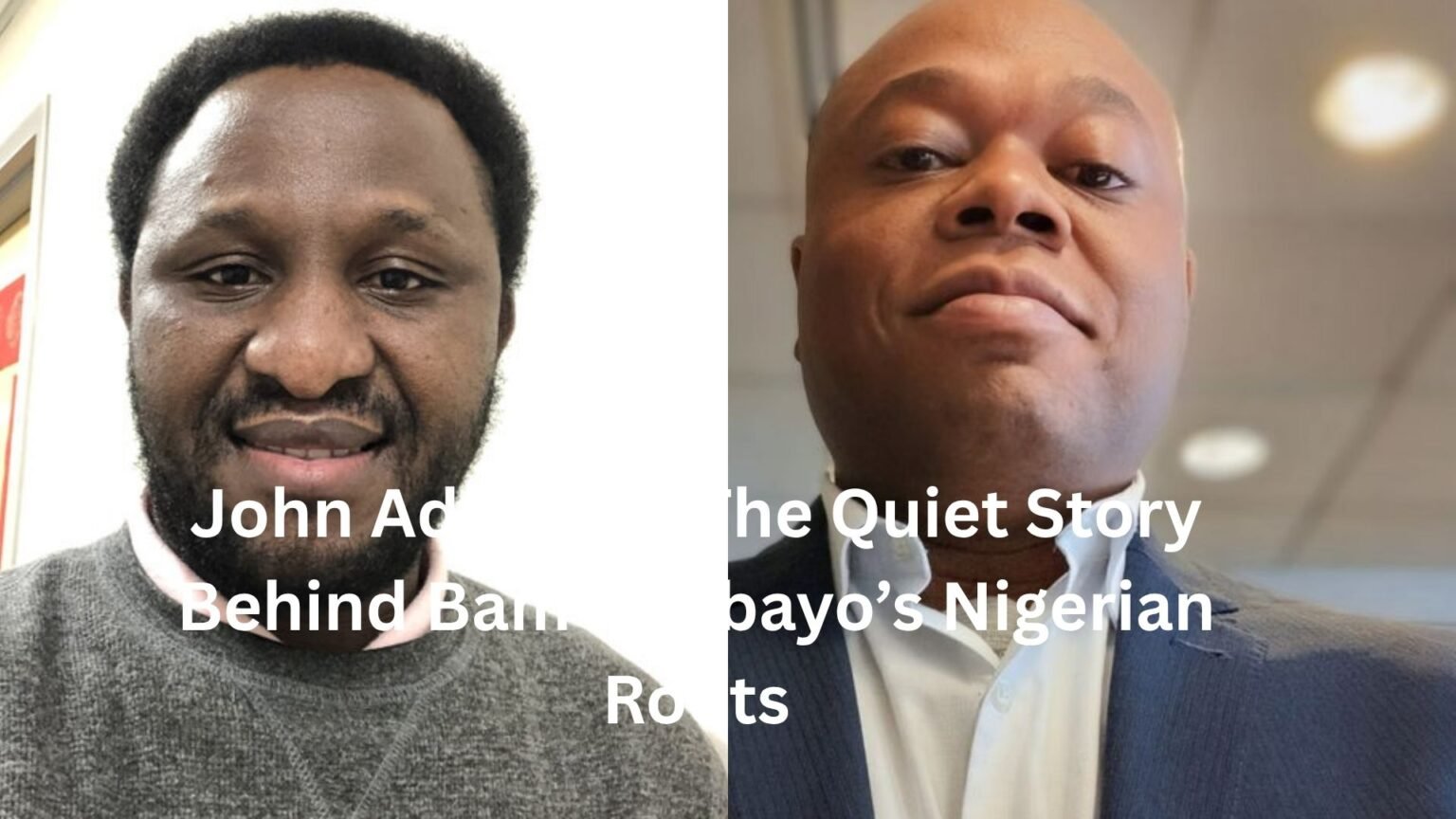
Most people only hear the name John Adebayo when they’re reading about Bam Adebayo. And usually, it comes up in a quick sentence. Something short about Bam’s father being Nigerian, absent for most of his life, and later becoming part of a deeper personal story.
But here’s the thing. Sometimes the people who barely appear in public still leave a lasting mark.
John Adebayo wasn’t famous. He wasn’t a public figure building a brand or giving interviews. In many ways, he stayed in the background. Yet his identity, his culture, and even his last name became important pieces of Bam Adebayo’s journey as he grew older.
That’s what makes the story interesting.
It’s not really about celebrity gossip. It’s about family distance, cultural identity, and how people often reconnect with their roots much later than expected.
A Man Most People Never Really Knew
There’s surprisingly little public information about John Adebayo, and honestly, that adds to the mystery around him.
What’s known is fairly simple. He was Nigerian, Yoruba, and originally from Ile-Ife in Osun State, a place deeply tied to Yoruba history and culture. At some point, he moved to the United States and later met Marilyn Blount, who would become the mother of Bam Adebayo.
That sounds straightforward enough.
But real life rarely stays neat.
John and Marilyn reportedly lived together for a period in Newark, New Jersey, where Bam was born in 1997. Life wasn’t glamorous. They weren’t raising a future NBA superstar in some polished suburban setup. It was a hard environment. Money was tight. Stability wasn’t guaranteed.
A lot of people can relate to that kind of beginning, even if the ending turns extraordinary.
Then things changed.
The relationship between John and Marilyn fell apart, and Bam eventually grew up mostly without his father around. His mother moved with him to North Carolina, where she raised him largely on her own.
And that’s where the emotional complexity starts.
Growing Up With Distance
Children notice absence early.
Even when adults try to soften it, kids understand when someone isn’t there. Especially a parent.
Bam Adebayo has spoken openly over the years about not having much of a relationship with his father. At one point, he even admitted he resented parts of his Nigerian heritage growing up because it reminded him of that distance.
That feels painfully human.
A lot of people experience something similar, though maybe on a smaller scale. Sometimes a surname, a language, or even a family tradition gets emotionally tangled with difficult memories. You don’t reject the culture itself. You reject the pain attached to it.
And when you’re young, it’s hard to separate the two.
Imagine being a teenager hearing questions about your background while still feeling abandoned by the person connected to that identity. That can create real internal conflict. Not dramatic movie-style conflict. Just quiet frustration that follows you around.
Apparently, Bam went through some of that.
Yet over time, something shifted.
The Meaning Behind “Adebayo”
Names carry weight. Especially in Yoruba culture.
The surname “Adebayo” roughly translates to “the crown meets joy” or “royalty brings happiness.” It’s one of those names that feels rich with history the moment you hear it.
When Bam was younger, that meaning probably didn’t matter much.
Later, it mattered a lot.
As he matured, especially after entering the NBA and gaining more life experience, he reportedly became more interested in his Nigerian background. He started learning more about Yoruba culture and embracing parts of the identity he once pushed away.
That happens to many people in adulthood.
You see it with immigrants’ children all the time. Someone spends years trying to blend in, avoiding questions about where their family came from, then suddenly in their late twenties they’re asking grandparents for recipes, stories, or old photographs.
Funny how identity works.
Sometimes you need distance before you can appreciate where you started.
Marilyn Blount Carried the Weight
Whenever John Adebayo’s story comes up, another name naturally enters the conversation: Marilyn Blount.
And honestly, you can’t separate the two stories.
While John represented Bam’s Nigerian roots, Marilyn represented survival. She raised Bam in difficult circumstances and worked low-paying jobs while trying to keep life together. According to multiple reports, they lived in a small trailer home in North Carolina for years.
That image matters because it grounds the story in reality.
People see NBA contracts now. They see Olympic gold medals and All-Star appearances. What they don’t always picture is the single mother figuring out how to stretch grocery money across the week.
That’s the part many athletes never forget.
And it probably shaped Bam’s perspective more than any highlight reel ever could.
Still, even though Marilyn was clearly the central parent in his upbringing, John’s absence remained part of the emotional landscape. Absence has a strange way of staying present.
Returning to Nigeria
After separating from Marilyn, John Adebayo reportedly returned to Nigeria, where he lived a quieter life away from public attention. Bam also learned later that he had half-siblings there.
Think about how surreal that must feel.
One day you’re focused on basketball practice and NBA pressure. The next, you’re realizing there’s another branch of your family living across the world.
Life can split in unexpected directions like that.
From the outside, people sometimes expect emotional stories to end cleanly. Reunions. Tears. Perfect closure. But real families are usually messier. There are unanswered questions, awkward silences, and years you can’t get back.
That seems true here too.
There’s no evidence John and Bam ever built a close father-son relationship before John’s death in 2020. But there are signs Bam began making peace with parts of the story afterward.
And honestly, that may be the most realistic outcome possible.
Not every family wound gets fully repaired. Sometimes people simply learn how to carry it differently.
Why People Became Interested in John Adebayo
The public interest in John Adebayo mostly grew because Bam himself became impossible to ignore.
Once Bam established himself as one of the NBA’s best defenders and most respected players, fans naturally became curious about his background. People always want the origin story. They want to know what shaped someone mentally before success arrived.
But what makes this particular story stick is how relatable it feels underneath the fame.
Strip away the NBA spotlight and you’re left with themes millions understand:
A child trying to understand an absent parent.
A complicated relationship with cultural identity.
A hardworking single mother doing everything she can.
An adult reconnecting with family history later in life.
That’s bigger than basketball.
You don’t need to watch the Miami Heat to connect with any of that.
A Story About Identity More Than Fame
There’s a tendency online to reduce people into simple categories. Hero. Villain. Success story. Failure.
Real people rarely fit those boxes.
John Adebayo certainly doesn’t.
He wasn’t publicly celebrated as a devoted father figure, but he also wasn’t turned into some cartoon villain either. Mostly, he remained a distant figure whose impact came indirectly through heritage, memory, and unfinished emotional threads.
And maybe that’s why the story feels honest.
Family relationships are often complicated in quiet ways. Not explosive. Just unresolved.
One of the most interesting parts of Bam’s evolution is how he eventually embraced the very identity he once resisted. That says something important about growth. Sometimes maturity means reclaiming pieces of yourself that used to hurt.
Not because the pain disappears.
Because you finally understand the full picture.
The Lasting Impact of a Name
John Adebayo may never become a widely known public figure outside basketball conversations, and that’s probably fine. His story isn’t built around fame.
It’s built around influence that traveled through bloodline, culture, and identity instead of daily presence.
That kind of influence is harder to measure.
But it matters.
Today, when people hear the name Adebayo, they immediately think of strength, defense, leadership, and resilience because of Bam’s success. Yet behind that name sits a deeper story rooted in Nigeria, family separation, and eventual self-acceptance.
And maybe that’s the real takeaway here.
A person doesn’t have to dominate the spotlight to shape someone’s life forever. Sometimes a surname, a culture, or even an absence becomes part of who someone eventually grows into.