
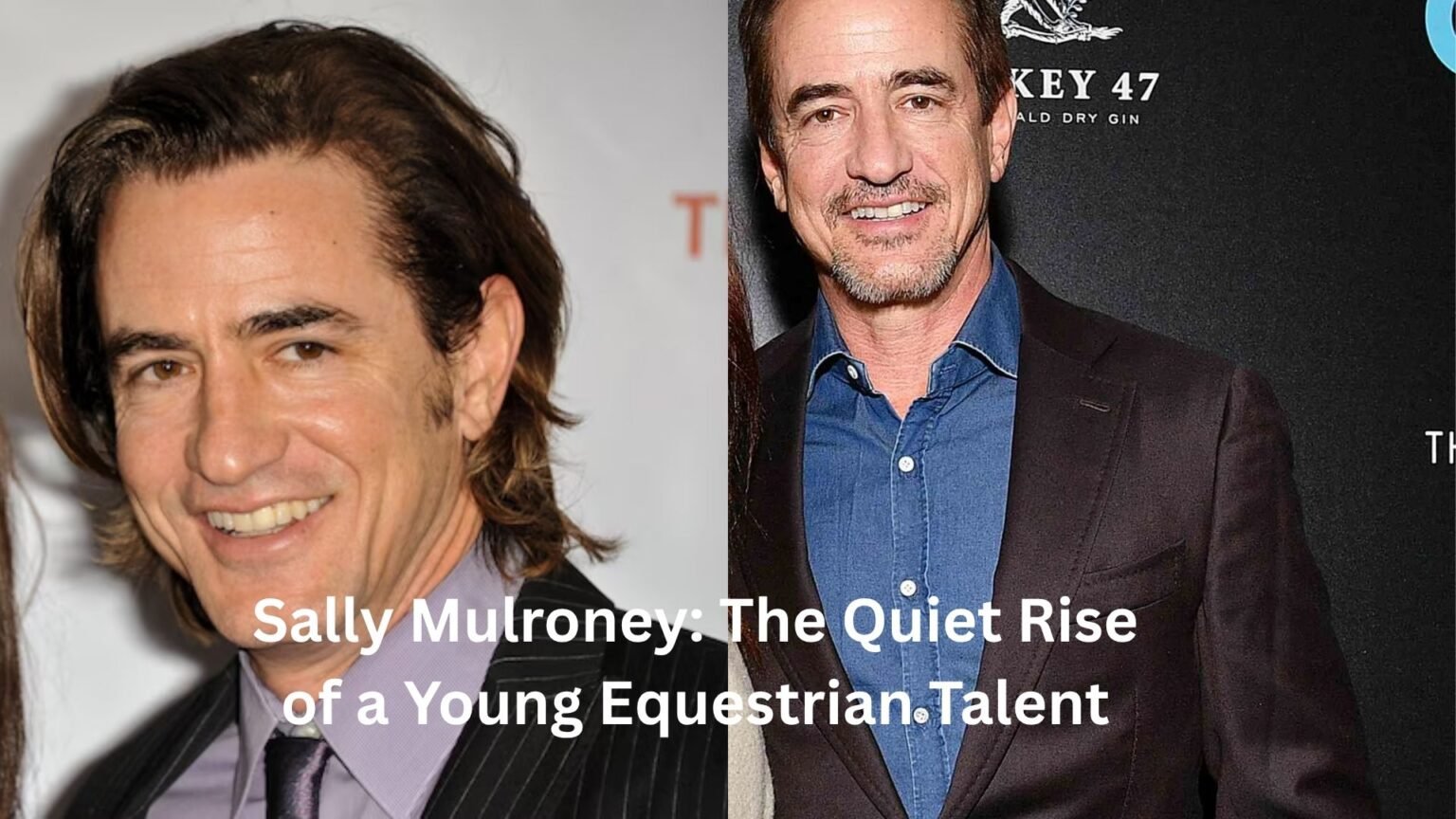
Some celebrity kids grow up chasing cameras. Sally Mulroney seems far more interested in chasing clean rounds on horseback.
That alone makes her interesting.
In a culture where famous last names often lead straight to social media fame or reality TV appearances, Sally has taken a very different route. She’s built a reputation in the equestrian world instead. Not loudly. Not with constant interviews or carefully staged headlines. Just through steady work, competition results, and the kind of discipline horse riding demands from people very early.
And honestly, that’s probably why more people have started paying attention to her.
Sally Mulroney is the daughter of actor Dermot Mulroney and musician Prima Apollinaare, also known as Tharita Cesaroni. But the deeper you look into her story, the less it feels like a typical Hollywood-family narrative. Horses, training schedules, junior hunter competitions, long days at stables. That’s the center of her world.
It’s a different kind of upbringing.
Growing up around creativity without becoming consumed by it
When people hear the Mulroney name, they usually think of Dermot Mulroney first. He’s been around Hollywood for decades, appearing in films like My Best Friend’s Wedding, The Family Stone, and The Wedding Date. He also happens to be a trained cellist, which surprises a lot of people.
Her mother has an artistic background too. Prima Apollinaare built a career around music and creative work while staying mostly out of the spotlight.
That matters because kids often absorb the atmosphere around them.
Some households revolve around status. Others revolve around work.
From what’s publicly known about Sally’s family, creativity seemed normal in her home rather than performative. Music, instruments, art, and privacy all existed together. There’s something grounding about that.
And let’s be honest, privacy is rare when celebrity families are involved.
A lot of famous parents say they want their kids to have normal lives. Few actually manage it. Sally appears to have been raised with fairly clear boundaries around public attention. You don’t see endless tabloid coverage or oversharing online. That probably gave her room to develop genuine interests instead of constantly performing for an audience.
In her case, that interest became horseback riding.
Why equestrian sports attract a certain kind of person
Horse riding looks elegant from the outside. Beautiful horses, polished boots, pristine arenas.
But anyone who’s spent real time around stables knows the truth.
It’s exhausting.
There are early mornings, dirty equipment, long drives to competitions, constant training, and emotional highs and lows that can change in seconds. One bad jump ruins an otherwise perfect round. One nervous horse changes everything.
That’s part of what makes Sally Mulroney’s progress interesting.
Junior hunter competitions are not casual weekend hobbies for riders competing at a national level. These events demand patience, consistency, and a surprising amount of emotional control. Riders don’t just train themselves. They build partnerships with animals that have moods, habits, and instincts of their own.
People outside the horse world sometimes underestimate that relationship.
A rider can’t simply overpower a horse into cooperation. The best performances usually come from trust, rhythm, and repetition.
That takes years.
Sally Mulroney’s growing reputation in competition circles
Over the past couple of years, Sally’s name has started appearing more regularly in equestrian competition coverage.
Not celebrity gossip coverage.
Actual riding results.
She competes primarily in junior hunter divisions and has trained under respected professionals, including Archie Cox III at Brookway Stables in California. Within equestrian communities, that carries weight. Riders at that level aren’t handed credibility because of their family background. Results matter.
And Sally has quietly produced them.
One of the horses most associated with her is Franklin, often called Frankie. The partnership between rider and horse seems to have developed strong momentum in recent seasons, with several notable performances in hunter competitions.
There’s a particular kind of pressure that comes with riding in judged events. Unlike racing, where the fastest time wins, hunter classes are about smoothness, style, rhythm, and presentation. Tiny mistakes matter.
A slightly awkward turn.
A rough landing.
An inconsistent pace.
Judges notice everything.
That’s why riders who consistently place well usually have excellent fundamentals.
Sally has reportedly earned strong placements at competitions like the Las Vegas National Horse Show and events connected to the Desert International Horse Park circuit in California. For a young rider, those are meaningful accomplishments.
And here’s the thing.
Equestrian sports are deeply competitive, but they rarely become mainstream celebrity news unless someone already follows the horse world closely. That creates an unusual dynamic for someone like Sally. She can improve steadily without carrying the same constant public pressure many celebrity children face.
In a strange way, that might actually help her.
The horse world teaches responsibility fast
People who grow up riding often mature differently.
Not better. Just differently.
There’s something about caring for large animals that changes your mindset early.
Even talented riders spend a huge amount of time doing unglamorous work. Cleaning tack. Grooming horses. Waiting around at barns. Learning patience after frustrating rounds.
A teenager can’t fake consistency around horses for very long.
The horse either trusts you or doesn’t.
That’s probably one reason equestrian communities tend to respect dedication more than image. Riders notice who shows up consistently and who treats the sport seriously.
Sally’s growing success suggests she’s putting in that work.
And unlike sports where physical dominance alone creates advantages, riding requires emotional steadiness too. Nervous riders affect nervous horses. Frustrated riders create tension. Calm matters.
A lot.
You can usually tell experienced riders by how quietly they operate around horses.
Living with a famous last name while building your own identity
There’s always a complicated balance for children of actors and musicians.
On one hand, famous parents create opportunities.
On the other hand, people constantly wonder whether achievements are truly earned.
That pressure can become exhausting.
Sally Mulroney seems to be navigating it in a fairly smart way by focusing on a world separate from Hollywood. The equestrian scene has its own hierarchy, standards, and expectations. Reputation there comes from performance and reliability over time.
Not from red carpet appearances.
That distinction matters.
You can imagine how easy it would’ve been for someone in her position to drift toward influencer culture instead. That path is everywhere now. Post enough photos, build an audience, attach your name to brands.
Instead, she appears to spend much of her energy training and competing.
That doesn’t make her anti-Hollywood or anti-fame. It just suggests she’s interested in building something tangible for herself.
Honestly, there’s something refreshing about that.
Family changes and staying grounded
Public reports in recent years have also focused on changes within her family, including the divorce proceedings involving Dermot Mulroney and Prima Apollinaare.
Celebrity divorces often become loud public spectacles.
This one seemed comparatively quiet.
That kind of privacy probably matters for teenagers trying to maintain normal routines. Competitive sports can actually become stabilizing during difficult family transitions because they provide structure. Training schedules don’t disappear because life becomes emotionally complicated.
You still show up.
You still ride.
You still prepare for the next event.
Athletes in many sports talk about that effect. Routine creates a sense of control when other things feel uncertain.
Now, nobody outside the family truly knows how Sally experienced those changes personally, and speculation usually helps nobody. But it’s fair to say that continuing to compete seriously during emotionally stressful periods says something about focus and resilience.
Why people are becoming curious about Sally Mulroney
Part of the growing interest around Sally comes from contrast.
She doesn’t fit the standard celebrity-child blueprint people expect.
There’s no endless public commentary.
No dramatic rebranding.
No attempt to dominate headlines.
Instead, she’s slowly becoming known within a very specific world through measurable performance.
That tends to create genuine curiosity.
People respect quiet progress.
Especially now, when so much attention online feels manufactured.
Another reason people are paying attention is that equestrian sports carry a unique mix of athleticism and lifestyle appeal. Even people who know nothing about hunter divisions still find the environment fascinating. The relationship between rider and horse has a timeless quality to it.
You don’t need to understand scoring systems to appreciate the discipline involved.
And young riders who perform well nationally usually start developing strong reputations long before adulthood.
The reality of pursuing equestrian competition seriously
It’s important to understand how demanding this path actually is.
Competitive riding isn’t a side hobby once someone reaches Sally’s level.
Travel becomes constant. School schedules often require flexibility. Training consumes weekends and holidays. Riders also deal with physical risk more than outsiders sometimes realize.
Falls happen.
Even experienced riders get injured.
Then there’s the mental side.
Horse competitions can humble people quickly because perfection is incredibly difficult. Riders often replay mistakes in their heads for days afterward.
A missed distance.
A poor decision approaching a fence.
An avoidable error that costs placement.
That pressure builds resilience over time, but it also filters out people who lack patience.
Sally’s continued rise in junior hunter competition suggests she’s handling those demands well.
What her future might look like
At this stage, predicting long-term outcomes would be unfair.
Teen athletes change directions all the time.
Some pursue professional competition. Others ride through college before shifting careers entirely. Some remain connected to horses for life without turning it into a public profession.
Still, Sally Mulroney already seems to have built something valuable.
She’s developing an identity connected to skill and commitment rather than simply family recognition.
That’s not easy.
And whether she stays in equestrian sports permanently or eventually moves toward other interests, the discipline involved in reaching this level usually leaves a lasting mark.
People who train seriously in demanding sports tend to carry certain habits forward. Patience. Focus. Routine. The ability to recover after bad performances.
Those qualities matter far beyond competition arenas.
The bigger takeaway from Sally Mulroney’s story
What makes Sally Mulroney interesting isn’t celebrity lineage alone.
There are countless celebrity children.
What stands out is the quieter direction she seems to have chosen.
Instead of building visibility through constant exposure, she’s building credibility inside a difficult sport that rewards consistency more than attention.
That’s a slower path.
Probably a healthier one too.
And maybe that’s why people increasingly want to know more about her. Beneath the Hollywood connections and recognizable surname, there’s a young athlete putting serious time into something demanding and real.
In the end, that’s usually what earns lasting respect.
Not noise.
Work.