
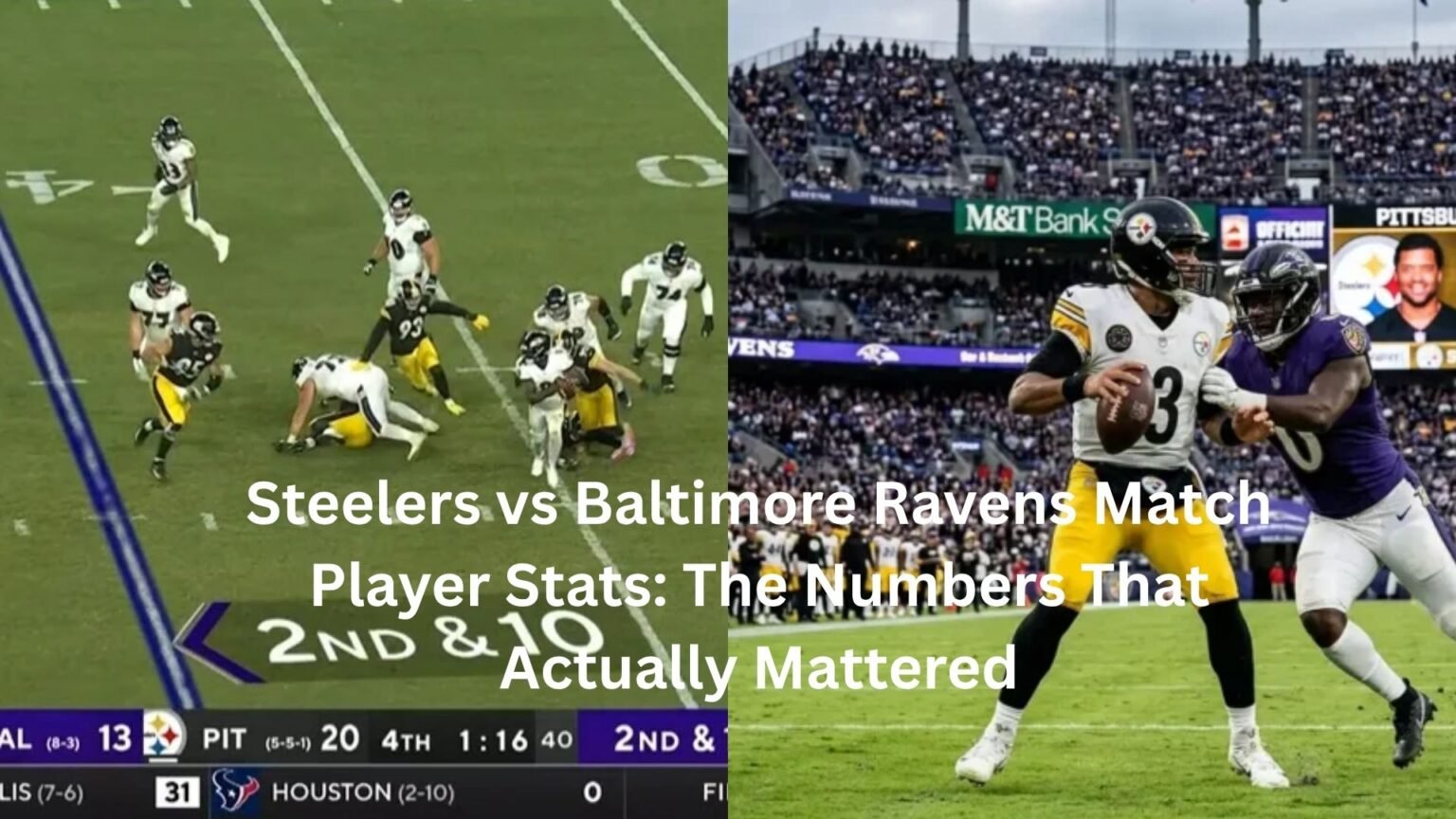
The rivalry between the Pittsburgh Steelers and the Baltimore Ravens has never really needed extra drama. It already comes with hard hits, ugly fourth quarters, defensive fights, and fan bases that treat every snap like a playoff moment.
And honestly, that’s what makes diving into the player stats so interesting. These games rarely belong to one superstar. Usually, they’re decided by a linebacker timing a blitz perfectly, a running back squeezing out three brutal yards, or a quarterback surviving pressure long enough to convert third-and-8.
That showed up again in the latest Steelers vs Ravens matchup. The box score tells part of the story. The individual player stats tell the rest.
Defense Set the Tone Early
You could feel it from the opening drive. Neither offense looked comfortable.
Pittsburgh’s defense came out flying downhill, and Baltimore answered the same way. That’s classic AFC North football. Nobody’s trying to win style points here.
For the Steelers, T.J. Watt once again looked like the guy offenses spend entire weeks worrying about. His pressure numbers don’t always fully show how disruptive he is because quarterbacks rush throws before he even gets there. Still, he finished with multiple quarterback pressures, a sack, and several plays that completely wrecked Baltimore’s timing.
There was one sequence in the second quarter where Baltimore had decent field position and seemed ready to build momentum. Watt crashed the edge, forced Lamar Jackson to scramble early, and suddenly the Ravens were punting again. That doesn’t always show up as a flashy stat, but it changes games.
On the Ravens side, Roquan Smith played exactly the kind of game Baltimore fans expect from him now. Sideline-to-sideline speed. Clean tackling. No wasted movement. He stacked up tackles quickly and helped limit Pittsburgh’s short passing game.
That matchup between Watt and Smith almost felt symbolic. Two defenses led by stars who don’t need gimmicks to dominate.
Lamar Jackson’s Numbers Were Complicated
Lamar Jackson had moments where he looked unstoppable, then stretches where the Steelers made life miserable for him.
Statistically, his passing numbers were decent enough. He moved the ball in chunks at times and connected on a few throws outside the numbers that reminded everyone why he’s still one of the toughest quarterbacks in football to defend. But the turnover issues and stalled drives mattered more than the raw yardage.
That’s the tricky thing with Lamar in games against Pittsburgh. The Steelers never really try to “stop” him completely. Few teams can. They focus on forcing uncomfortable decisions.
And for long stretches, that worked.
Jackson still made plays with his legs. He always does. A couple of third-down scrambles kept drives alive and frustrated Pittsburgh’s pass rush. But the explosive game-breaking runs weren’t there consistently.
Part of that came down to discipline from the Steelers linebackers. They didn’t overcommit much. That’s easier said than done against Lamar. One bad angle and he’s gone for 40 yards.
Instead, Pittsburgh forced Baltimore into a slower, more methodical offense. The Ravens can play that style, but it’s not always where they’re most dangerous.
Steelers Offensive Stats Weren’t Pretty, But They Worked
Let’s be honest. Nobody watches Steelers-Ravens expecting offensive fireworks.
Pittsburgh’s offense looked uneven for parts of the game, yet somehow still managed enough key drives to stay in control late.
Najee Harris quietly had one of the more important stat lines of the night. The rushing totals won’t blow anyone away, but the timing of his runs mattered. Short-yardage conversions. Tough fourth-quarter carries. Physical downhill football.
That’s the kind of performance fans remember even if fantasy football managers don’t.
There was a late drive where Harris ripped off back-to-back runs through contact that completely changed field position. Not flashy. Just exhausting football for a defense that had already spent most of the night hitting people.
Meanwhile, George Pickens continued to show why he’s one of the most dangerous contested-catch receivers in the league. Even when Pittsburgh’s passing game sputters, he can create explosive plays from almost nothing.
His receiving stats reflected that boom-or-bust style. A few quiet stretches mixed with massive chunk plays.
And that’s kind of the George Pickens experience right now.
Quarterback Play Became the Difference Late
The quarterback comparison ended up being more about situational football than total numbers.
For Pittsburgh, Russell Wilson managed the game with far more composure than people expected heading into the matchup. He avoided the catastrophic mistake and extended drives when protection broke down.
That mattered.
Against Baltimore’s defense, one careless turnover can swing everything instantly.
Wilson wasn’t perfect. There were missed throws and a couple of drives that stalled because the offense couldn’t stay ahead of the chains. But he handled pressure reasonably well and picked his moments to attack.
Meanwhile, Jackson’s stat line looked productive in spots, yet several missed opportunities hurt Baltimore badly. A red-zone sequence in particular felt huge. The Ravens moved the ball effectively, then stalled when Pittsburgh tightened coverage and collapsed the pocket.
That’s been the story of this rivalry for years. Yards matter less than execution under pressure.
The Hidden Stats Told a Bigger Story
Sometimes the most important numbers aren’t the obvious ones.
Third-down efficiency was massive in this game. Pittsburgh consistently forced longer third downs defensively, while Baltimore struggled to get off the field during a few critical drives.
Time of possession also leaned toward the Steelers during important stretches. That helped wear down Baltimore’s front seven and kept Lamar standing on the sideline longer than the Ravens wanted.
Then there’s the turnover battle.
These games almost always come down to one or two mistakes, and Pittsburgh capitalized better. Even when the Steelers offense stalled, they usually avoided disaster. Baltimore couldn’t say the same.
Field position quietly became another deciding factor. The Steelers repeatedly made the Ravens drive long distances, and against a defense like Pittsburgh’s, that becomes exhausting over four quarters.
It’s a little like trying to drive across town while hitting every red light possible. Eventually something goes wrong.
Baltimore’s Running Game Never Fully Took Over
One surprising part of the matchup was how inconsistent Baltimore’s rushing attack looked overall.
Normally, the Ravens wear teams down with constant movement, option looks, and layered rushing concepts. This time, Pittsburgh handled it better than most opponents do.
Derrick Henry showed flashes of power and broke a few punishing runs, but the Steelers rarely allowed sustained dominance on the ground. That’s important because Baltimore’s offense becomes much harder to defend once the running game completely controls tempo.
Instead, Pittsburgh forced too many second-and-long situations.
That changed everything.
The Ravens became more dependent on Jackson improvising rather than dictating the game structurally. There’s a difference between a quarterback making magic happen occasionally and an offense needing magic constantly.
Against elite defenses, the second approach usually catches up to you.
Pittsburgh’s Secondary Deserves More Credit
A lot of attention naturally goes to Watt and the pass rush, but Pittsburgh’s secondary played a smarter game than the raw stats suggest.
They tackled well in space and prevented Baltimore receivers from turning short catches into huge gains.
Minkah Fitzpatrick especially looked comfortable directing traffic in the backend. His ability to disguise coverage before the snap created hesitation for Jackson more than once.
That’s another detail casual viewers sometimes miss.
An extra half-second of hesitation against Pittsburgh’s pass rush feels like an eternity.
The Steelers defensive backs also avoided giving up the devastating deep ball. Baltimore had opportunities, but explosive completions never arrived consistently enough to flip momentum.
That forced the Ravens into longer drives, and longer drives increase the odds of penalties, sacks, or turnovers eventually killing possession.
Physical Football Still Wins This Rivalry
People talk constantly about how modern NFL offenses are evolving. More motion. More spacing. More explosive passing attacks.
Then Steelers-Ravens happens and suddenly it looks like football from another era.
Not completely, of course. The league has changed too much for that. But this rivalry still rewards physical toughness in ways most matchups don’t.
You can see it in the player stats.
Linebackers pile up tackles. Running backs earn every yard. Quarterbacks absorb hits all afternoon. Defensive linemen rotate constantly because the workload is brutal.
Even the receivers contribute differently in these games. Blocking matters. Fighting through contact matters. Timing matters.
That’s why certain players consistently thrive in this rivalry while others disappear.
What the Final Stats Really Said
At first glance, the overall numbers looked relatively balanced. Total yards weren’t wildly separated. Both defenses had stretches of dominance. Both offenses sputtered.
But the critical stats leaned Pittsburgh’s way.
Better situational execution. Fewer damaging mistakes. More success on key downs.
That’s usually enough in games between these teams.
And honestly, that’s why this rivalry keeps delivering year after year. It rarely feels random. The team that handles pressure better almost always wins.
The standout individual performances mattered, sure. Watt’s disruption. Jackson’s improvisation. Harris grinding out difficult carries. Smith flying around defensively.
Still, the real story sat between the lines of the stat sheet.
One team stayed disciplined longer.
One team blinked less.
And in Steelers vs Ravens games, that’s often the entire difference.