
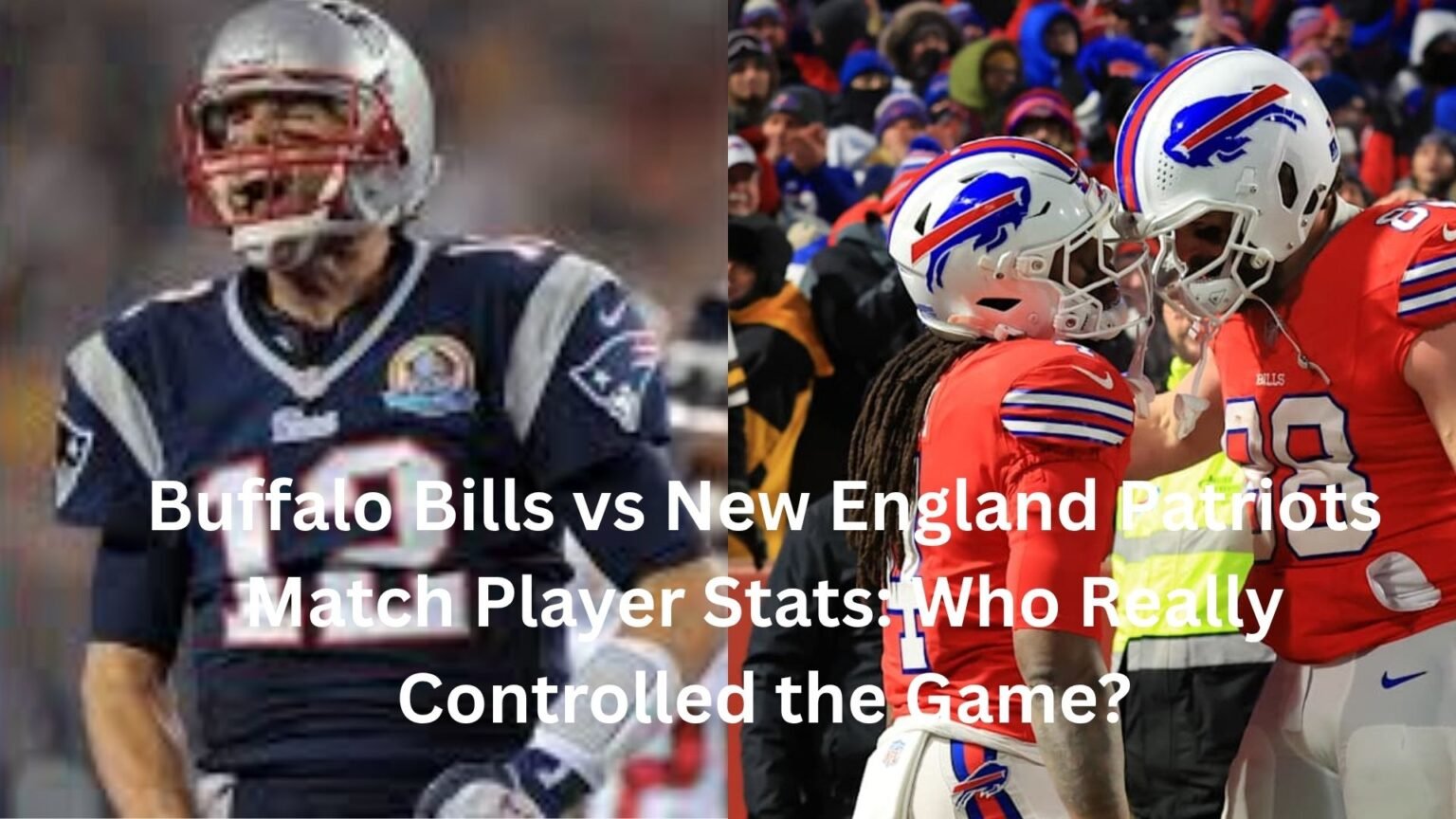
Bills vs Patriots games always carry extra weight. Doesn’t matter if one team is chasing the playoffs and the other is rebuilding. The AFC East history alone makes these matchups feel personal. Every tackle looks a little harder. Every third down matters more.
And when you look closely at the player stats from recent Buffalo Bills vs New England Patriots matchups, one thing becomes obvious: the gap between the teams isn’t just about wins and losses anymore. It’s showing up everywhere — quarterback efficiency, explosive plays, defensive pressure, even time of possession.
That said, stats never tell the full story by themselves. A quarterback can throw for 250 yards and still feel invisible. A running back might only finish with 60 yards but completely change the tone of the game with a few ugly, physical carries in the fourth quarter.
That’s what makes these games interesting to break down.
Josh Allen Still Changes Everything
You can start almost anywhere with Bills player stats, but eventually the conversation circles back to Josh Allen.
Against New England, Allen has consistently looked comfortable over the past few seasons. That wasn’t always true. Earlier in his career, Bill Belichick’s defenses confused him with disguised coverages and delayed pressure packages. You could actually see Allen hesitating before throws.
Now? Different story.
In recent Bills vs Patriots matchups, Allen’s numbers have been brutally efficient. Completion percentages hovering around the high 60s. Multiple touchdown performances. Limited turnovers. More importantly, he’s controlling tempo.
One thing that stands out is how Allen attacks the middle of the field against New England now. The Patriots used to force everything outside. Buffalo adjusted by using quicker timing routes and letting Allen work through progressions faster.
It sounds simple, but football rarely is.
There’s also the rushing factor. Allen’s scrambling stats don’t always explode on paper, but his third-down runs are backbreakers. A 7-yard scramble on 3rd-and-5 feels small until you realize it extends a drive that ends with points.
Fans remember touchdowns. Coaches remember those conversions.
Mac Jones Had Moments, But Consistency Was the Problem
When Mac Jones entered the league, some people thought he’d fit perfectly into New England’s system-heavy approach. Quick reads. Accurate short passing. Smart decisions.
And honestly, there were flashes.
Against Buffalo, though, the numbers often became a struggle once the game script shifted. If the Patriots fell behind early, Jones usually had to throw more aggressively than the offense wanted.
That’s where Buffalo’s defense started dictating everything.
In several Bills vs Patriots games, Jones posted decent completion numbers but very little downfield production. You’d see stat lines like 24 completions for under 200 yards. Technically efficient. Practically limited.
There’s a difference.
Buffalo’s secondary deserves credit here. The Bills frequently forced underneath throws while keeping explosive plays under control. That strategy squeezed New England into long drives requiring near-perfect execution.
Most NFL offenses crack eventually under that pressure.
A good example came during a cold-weather matchup where Jones completed short passes all afternoon but struggled once Buffalo tightened coverage near the red zone. The Patriots moved the ball between the 20s. Then everything stalled.
That happened more than once.
Stefon Diggs Was Usually the Most Dangerous Player on the Field
There are receivers who collect stats quietly, and there are receivers who tilt coverage before the snap even happens.
Stefon Diggs belongs in the second category.
Against New England, Diggs consistently forced defensive adjustments. Double teams. Safety help. Softer underneath zones. Even when his stat line wasn’t massive, his presence created room for everyone else.
Still, plenty of his games against the Patriots were statistically dominant too.
Diggs regularly posted high reception totals in these matchups because Buffalo trusted him in critical situations. Third-and-medium. Red zone fades. Quick slants against pressure. Allen looked his way constantly.
And let’s be honest — New England never really found a lasting answer for him.
One underrated piece of Diggs’ production is timing. He doesn’t just pile up catches during garbage time. His biggest plays usually arrive when defenses desperately need a stop.
That’s what separates productive receivers from game-changing ones.
There were moments where Patriots defensive backs actually covered him reasonably well initially, only for Allen to extend the play and Diggs to uncover late. That chemistry matters more than raw speed sometimes.
The Patriots’ Running Game Tried to Keep Things Close
When New England stayed competitive against Buffalo, the rushing attack usually played a major role.
Rhamondre Stevenson especially became a key piece in these games. His stat lines may not always jump off the screen, but his physical running style helped the Patriots slow Buffalo’s offensive rhythm.
That matters more than casual fans realize.
A long, grinding 12-play drive does two things at once: it gives your offense confidence and keeps Josh Allen standing on the sideline. Against Buffalo, that’s practically a defensive strategy by itself.
Stevenson often produced solid yards after contact against the Bills. Even when Buffalo’s defensive front controlled early downs, he’d salvage difficult situations with hard runs between the tackles.
Damien Harris had similar moments before leaving New England as well. The Patriots wanted balance because pure shootouts against Buffalo usually ended badly for them.
And honestly, that was probably the right approach.
Buffalo’s Defensive Front Quietly Won Key Moments
People naturally focus on quarterbacks and wide receivers, but Buffalo’s defensive line changed several Patriots games in subtle ways.
Not always through huge sack totals either.
Pressure statistics only tell part of the story. Sometimes a quarterback hurries a throw half a second early because he knows pressure is coming. That doesn’t show up cleanly in the box score.
Ed Oliver caused plenty of those problems.
His interior pressure disrupted New England’s pocket structure repeatedly. That’s especially damaging against quarterbacks who rely on timing and rhythm. Jones often looked more uncomfortable against inside pressure than edge rushers.
Meanwhile, players like Greg Rousseau helped contain the Patriots’ outside run game while still generating pass rush pressure.
Buffalo’s defense became hard to attack consistently because they didn’t need constant blitzing. That allowed extra defenders in coverage, which narrowed throwing windows even more.
You could almost feel the frustration building during some Patriots drives. A short gain here. Incompletion there. Then suddenly it’s 3rd-and-9 again.
That’s how disciplined defenses wear teams down.
Turnovers Shifted the Entire Tone
Here’s the thing about Bills vs Patriots games lately: turnovers haven’t just been important. They’ve been decisive.
Buffalo generally protected the football better, and that changed everything.
Allen deserves credit for reducing reckless mistakes against New England over time. Early in his career, he occasionally forced impossible throws trying to create highlights. More recently, he’s taken smarter checkdowns and trusted Buffalo’s overall talent advantage.
That patience shows maturity.
On the Patriots side, turnovers often arrived at the worst possible moments. A tipped interception. A strip sack during a promising drive. One special teams mistake flipping field position.
Against elite offenses, those errors multiply quickly.
There was one stretch where Buffalo turned a single takeaway into an immediate touchdown drive, and suddenly a close game became a two-score gap. Fans sometimes describe games as “getting away fast,” and turnovers are usually why.
Momentum swings in football feel emotional when you’re watching live, but statistically they’re often tied directly to hidden possession changes.
Special Teams Still Matters More Than People Admit
Nobody rushes to social media to celebrate a perfectly executed punt coverage unit.
But field position shaped several Bills vs Patriots matchups.
The Patriots traditionally built part of their identity around hidden yardage — disciplined returns, smart punting, reliable kicking. During their dynasty years, they quietly won small situational battles every week.
Buffalo eventually started matching that discipline.
Tyler Bass delivered important kicks in difficult weather conditions during some key meetings, while Buffalo’s return coverage prevented the Patriots from stealing momentum through special teams.
That sounds boring until a playoff race comes down to one possession in freezing wind.
And weather absolutely plays a role in these AFC East games. Wind, snow, freezing rain — all of it changes play calling and player performance. Quarterback stats especially need context in these matchups.
A 220-yard passing game in brutal December wind can actually be more impressive than a 320-yard dome performance.
Defensive Backs Had Their Hands Full
The secondary battles in Bills vs Patriots games deserve more attention than they get.
Christian Gonzalez showed flashes of becoming a legitimate shutdown corner for New England before injuries interrupted his season. Matching up against Diggs is one of the hardest assignments in football, and Gonzalez competed better than many veterans.
On Buffalo’s side, players like Taron Johnson and Jordan Poyer consistently handled difficult coverage responsibilities against New England’s tight ends and slot receivers.
The Bills’ defensive communication stood out too.
You rarely saw complete breakdowns against the Patriots. Buffalo forced New England to earn yards methodically rather than giving away explosive plays through blown coverages.
That’s disciplined football.
And frankly, it reflects strong coaching preparation.
What the Stats Really Say About the Rivalry Right Now
If you zoom out and look at the broader player stats across recent Bills vs Patriots games, Buffalo’s advantage becomes pretty clear.
The Bills have generated more explosive plays. Better quarterback production. More efficient red-zone offense. Stronger turnover margins.
That’s not random.
Buffalo built a roster designed to compete with elite AFC teams, and New England spent several seasons searching for offensive identity after Tom Brady left.
The result showed up directly in individual performances.
Allen looked freer. Diggs looked more dangerous. Buffalo’s defense played faster because they weren’t constantly protecting slim margins.
Meanwhile, the Patriots often entered these games trying to shorten possessions and avoid mistakes rather than aggressively attacking.
That approach can keep games respectable, but it’s hard to sustain against high-powered offenses for four full quarters.
Still, rivalry games never become completely predictable. That’s why people keep watching them.
One turnover. One blocked punt. One busted coverage. Suddenly all the statistical trends feel irrelevant for an afternoon.
And honestly, that uncertainty is part of what makes Bills vs Patriots football still worth paying attention to, even as the balance of power has clearly shifted.