
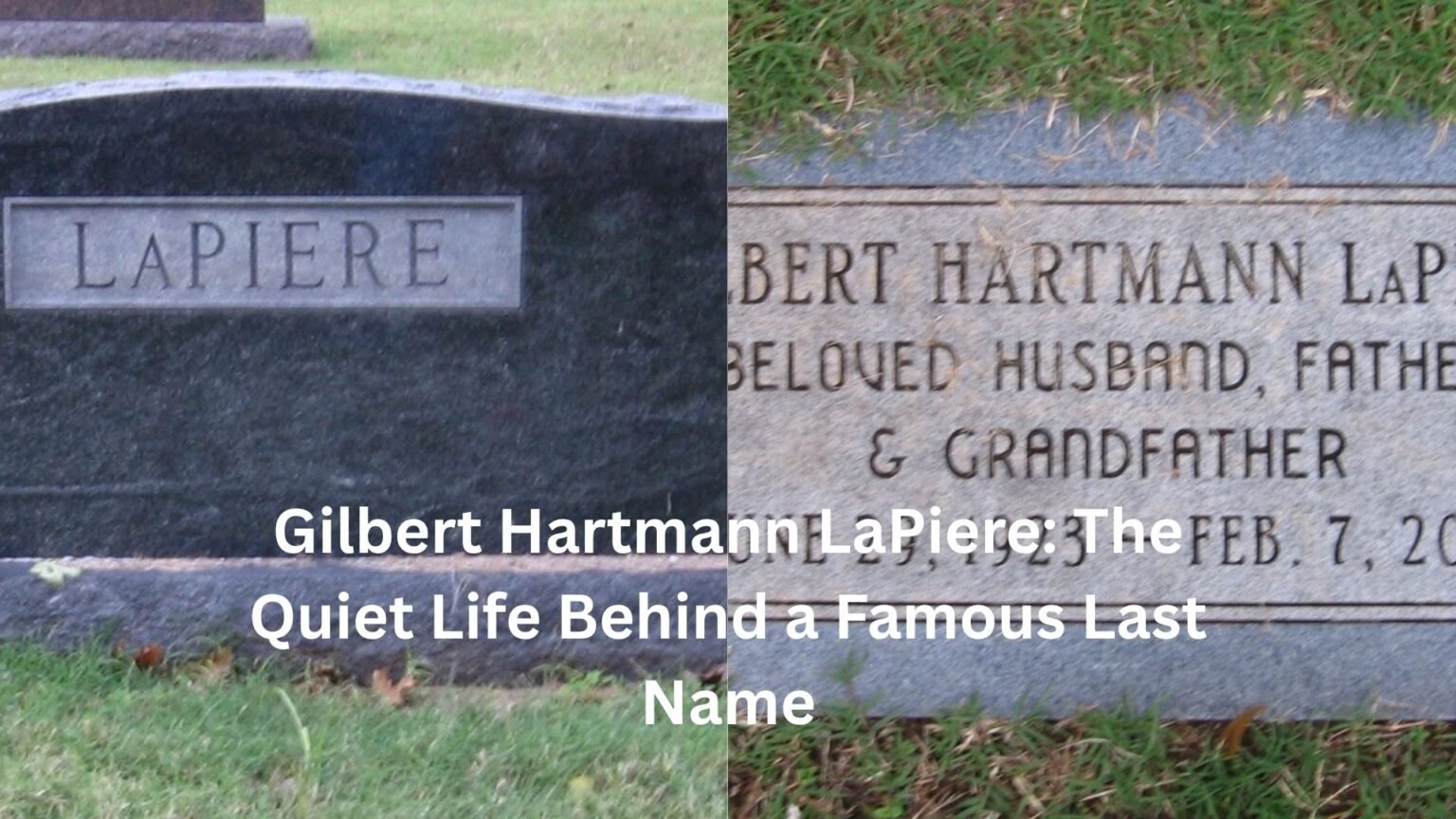
Most people who search for Gilbert Hartmann LaPiere usually get there through one unexpected route: Cher.
That makes sense. LaPiere was the man who legally adopted Cher during her childhood, and for years she carried his surname. But once you start digging into his story, something interesting happens. He stops feeling like a side character in celebrity history and starts looking like a genuinely fascinating American life on its own.
War veteran. Petroleum engineer. Financial consultant. Golf addict. Oil business fixer. Stepfather. Mentor. The kind of man people kept describing as “a gentleman,” which honestly sounds cliché until you notice how many completely different people used the exact same word for him.
And here’s the thing about men like Gilbert Hartmann LaPiere: they rarely become household names. They’re usually standing one step outside the spotlight, shaping lives quietly while everyone else gets photographed.
Still, his life touched more corners of American culture than most people realize.
A Childhood That Built Toughness Early
Gilbert Hartmann LaPiere was born in Irvington, New Jersey, in 1923 and grew up in nearby Newark. By all accounts, he had the kind of upbringing that produced disciplined, practical people. He became an Eagle Scout while still young, played sports seriously, and eventually studied petroleum engineering at the Missouri School of Mines.
That combination says a lot already.
Engineering students in the 1940s weren’t chasing startup culture or personal branding. They were usually preparing for hard industries with real physical stakes. Oil fields. Heavy machinery. Production. Logistics. Places where mistakes cost money fast.
Then World War II interrupted everything.
Like many men of his generation, LaPiere paused college and joined the Army Air Corps. He became a bombardier on B-24 bombers in the Pacific theater and reportedly completed thirty-five missions. At one point, he even survived ditching a damaged aircraft into the ocean after a mission.
Now, let’s be honest. Thirty-five bombing missions during World War II wasn’t some casual military assignment. Survival odds for air crews could be brutal. Men came home older than their years, even if they were technically still young.
People who lived through that period often carried a different kind of calm afterward. You see hints of that in the way friends and family later described him. Steady. Generous. Measured. Not flashy.
He Built a Career in the Oil World Before Most People Understood It
After the war, LaPiere finished his engineering degree and entered the oil and gas business. That alone might sound ordinary today, but during the postwar decades, oil wasn’t just another industry. It was one of the engines driving American expansion.
He started with Cities Service Oil Company in Oklahoma before moving into banking and finance work tied to oil and gas development. Eventually, he worked at Chase Bank in New York, helping evaluate oil and gas loans and deals.
That’s where his career gets more interesting.
A lot of people imagine the oil business as roughnecks, drilling rigs, and giant corporations. But behind every successful oil operation sits a financial structure. Loans. Risk analysis. Mergers. Asset valuations. Someone has to decide whether a project is smart or financially doomed.
LaPiere apparently became very good at that side of the industry.
He later managed oil and gas operations for financial firms on Wall Street and eventually worked independently as a consultant, helping struggling companies stabilize or restructure.
That role tells you something important about his reputation.
Companies usually don’t bring in outside consultants unless there’s pressure. Maybe the books are messy. Maybe the business is bleeding cash. Maybe leadership can’t agree on a direction. The people who succeed in those situations tend to be calm under stress and unusually good at reading people.
You can almost picture it.
A conference room somewhere in the 1960s. Cigarette smoke hanging in the air. Executives arguing over production numbers. And LaPiere sitting there quietly, cutting through noise with practical answers.
Some people thrive in chaos because they know how to slow a room down.
He seems to have been one of them.
The Cher Connection Changed Public Curiosity
Of course, most modern searches about Gilbert Hartmann LaPiere happen because of his connection to Cher and her mother, Georgia Holt.
LaPiere married Georgia Holt in the early 1960s and legally adopted Cher and her sister Georganne. For a time, the girls carried his surname.
That detail matters more than people think.
Adoption isn’t just paperwork. Especially during that era. Taking responsibility for children financially and emotionally carried serious weight. By several accounts, LaPiere treated the girls as his own and remained an important figure in their lives even after his marriage to Georgia Holt ended.
Cher herself later wrote warmly about him, saying she loved him deeply.
And honestly, that says plenty.
Celebrity memoirs are often full of complicated family stories, strained relationships, and emotional distance. The fact that Cher continued speaking positively about LaPiere decades later suggests he left a real mark.
Not necessarily through grand gestures either.
Sometimes father figures matter because they create stability during chaotic years. A calm ride to school. Someone who actually shows up. Someone who sets boundaries without cruelty.
People remember that stuff forever.
He Lived Like Someone Who Didn’t Need Attention
One thing that stands out about Gilbert Hartmann LaPiere is how little self-promotion seems connected to him.
You don’t find stories about him chasing publicity. No loud business persona. No dramatic reinventions. No public feuds.
Even after becoming connected to famous people, he mostly stayed private.
That feels rare now.
Modern culture rewards visibility. Everybody’s building a personal brand. Everybody’s performing online. Even ordinary professionals feel pressure to constantly present themselves.
LaPiere came from an older model of success. The quieter kind.
You worked. You built relationships. You earned trust over years. Maybe decades.
According to his obituary, he loved golf, spent summers in North Carolina, enjoyed cruises with his wife Beverly, and maintained close friendships throughout his life.
There’s something deeply human about that list.
Not glamorous. Just grounded.
You can almost imagine him at a country club after a round of golf, talking business and life with friends he’d known for years. The kind of guy who remembered names, asked questions, and didn’t need to dominate every conversation.
That personality type often ages well because people genuinely like being around them.
Why People Still Search for Him
At first glance, it’s surprising that people continue looking up Gilbert Hartmann LaPiere years after his death in 2012.
But there are a few reasons.
The obvious one is Cher. Anytime her memoirs, documentaries, or interviews revisit family history, curiosity around LaPiere rises again. In fact, renewed discussion about Cher’s legal surname brought his name back into public conversation recently.
But there’s another reason too.
People are increasingly interested in the hidden figures around famous lives. Not just the stars themselves, but the parents, mentors, spouses, and step-parents who shaped them.
And LaPiere represents a certain American generation that’s slowly disappearing from living memory.
Men who fought in World War II, entered booming industries afterward, built long careers without social media visibility, and quietly influenced families behind the scenes.
Their stories feel different from modern celebrity culture because they weren’t curated in real time.
You mostly discover them afterward, through scattered memories and old newspaper clippings.
The Strange Reality of Being Remembered Through Someone Else’s Fame
There’s a bittersweet aspect to LaPiere’s legacy.
For many people, he’ll always be introduced as “Cher’s stepfather” first.
That’s unavoidable. Fame works like gravity. It pulls every nearby story toward itself.
But reducing him to that single detail misses the fuller picture.
Before he ever met famous entertainers, he had already survived war missions, built a serious engineering and finance career, and established himself professionally. He advised oil companies long before internet culture turned business personalities into mini celebrities.
And honestly, plenty of people live meaningful lives without becoming globally recognizable names.
There’s value in remembering that.
Not every influential person appears on magazine covers. Some shape families. Some rescue struggling businesses. Some become trusted voices in rooms where important decisions happen quietly.
That still counts.
Maybe more than ever.
A Life That Feels Surprisingly Relevant Today
What makes Gilbert Hartmann LaPiere interesting now isn’t just his biography. It’s the contrast.
His life came from an era that prized steadiness over visibility.
Competence over performance.
Experience over branding.
That doesn’t mean the past was magically better. It wasn’t. But there’s something refreshing about reading about a man whose reputation mostly rests on consistency and character rather than image management.
People who knew him repeatedly described kindness, generosity, and calm professionalism.
Those aren’t flashy qualities. They also happen to be the qualities most people want around them when life gets difficult.
And maybe that’s the real reason his story keeps resurfacing.
Because underneath the celebrity connection and historical details, Gilbert Hartmann LaPiere reminds people of someone they’ve known before. A steady father figure. A respected mentor. A businessman who handled pressure without becoming unbearable.
The kind of person whose influence stretches further than public recognition ever could.