
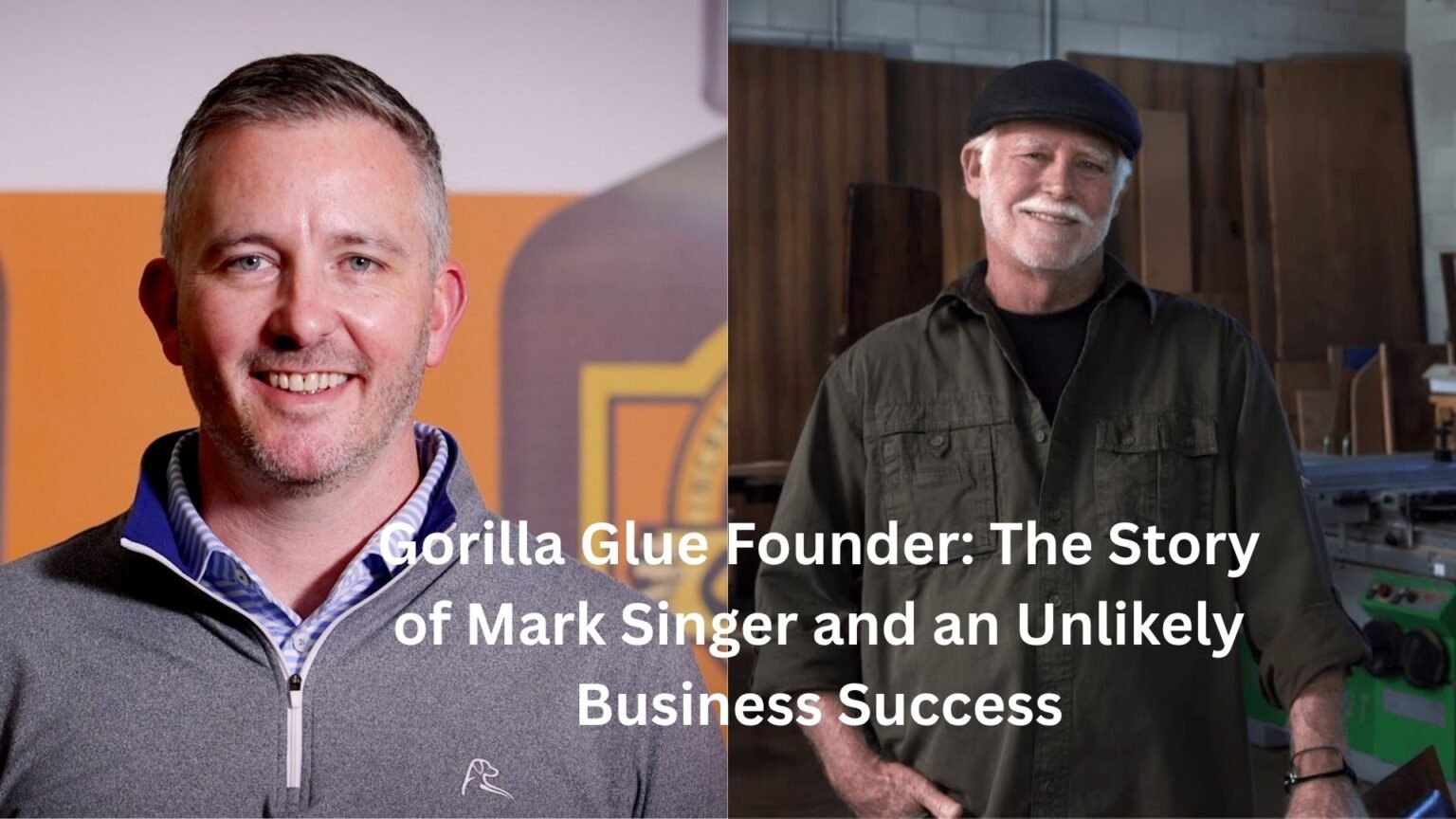
Most people know Gorilla Glue because of the bright orange bottle sitting in a garage, toolbox, or kitchen junk drawer somewhere. It’s one of those brands that became so familiar that many people use the name almost like a category itself.
What fewer people know is the story behind the Gorilla Glue founder and how a relatively unknown adhesive turned into a household name.
The path wasn’t built in a laboratory by a team of chemists trying to create a global brand. Instead, it started with a businessman who spotted an opportunity, trusted his instincts, and took a chance on a product most Americans had never heard of.
That founder was Mark Singer, and his story is a reminder that sometimes great businesses grow from simple observations rather than grand plans.
Who Is the Gorilla Glue Founder?
Mark Singer is widely recognized as the founder of The Gorilla Glue Company.
Before Gorilla Glue became a major brand, Singer was involved in various business ventures. The breakthrough came during a trip to Indonesia in the 1990s. While visiting a furniture manufacturer, he encountered a polyurethane adhesive that was being used to bond teak furniture.
The glue stood out because it was exceptionally strong and worked well under challenging conditions.
At the time, the American consumer adhesive market looked very different. Most people were familiar with traditional wood glues, epoxies, and a handful of general-purpose products. Polyurethane glue wasn’t something the average homeowner had sitting on a shelf.
Singer saw something others hadn’t fully recognized.
Instead of viewing the adhesive as a niche industrial product, he believed it could have broad appeal among consumers.
That insight became the foundation of the Gorilla Glue brand.
The Discovery That Changed Everything
Business success stories often sound dramatic in hindsight. The reality is usually much simpler.
Singer didn’t invent the glue itself. That’s an important distinction.
What he did was identify a product with untapped potential and find a way to bring it to a much larger audience.
During his visit to Indonesia, he noticed how effectively the polyurethane adhesive performed in furniture manufacturing. The glue expanded as it cured, creating strong bonds on a variety of materials.
For furniture makers dealing with hardwoods and changing environmental conditions, those qualities mattered.
Singer believed homeowners, woodworkers, and repair enthusiasts would appreciate the same benefits.
Think about a typical weekend project. Someone is repairing a broken chair, fixing outdoor furniture, or building a shelf. A stronger, more versatile adhesive could solve problems that traditional glues sometimes couldn’t.
That practical appeal became central to the brand’s growth.
Why the Name “Gorilla Glue” Worked
A great product helps. A memorable brand helps even more.
The name Gorilla Glue immediately communicated strength.
People didn’t need a lengthy explanation. The image was clear. Gorillas are powerful. The glue is strong.
Simple.
Many successful brands achieve recognition because they make life easier for customers. A person standing in a hardware store doesn’t want to spend ten minutes comparing technical specifications.
They want confidence.
The Gorilla Glue name delivered that confidence before someone even picked up the bottle.
The packaging reinforced the message. The branding was distinctive, easy to spot, and difficult to confuse with competitors.
Looking back, it seems obvious. At the time, it was a smart branding decision that helped separate the product from countless other adhesives on store shelves.
Building a Brand in a Crowded Market
Launching a product is one thing.
Convincing people to switch from products they’ve trusted for years is another challenge entirely.
When Gorilla Glue entered the market, consumers already had plenty of adhesive choices. Hardware stores weren’t exactly lacking options.
Singer and his team had to educate customers about why polyurethane glue was different.
One characteristic that made Gorilla Glue stand out was its versatility. It could bond wood, stone, metal, ceramic, foam, and several other materials.
That mattered because many consumers don’t want a separate adhesive for every repair project.
Imagine someone fixing a loose garden decoration one day and repairing a wooden table the next. A single product that handled both jobs offered real convenience.
Word-of-mouth also played a role.
People tend to share discoveries that solve frustrating problems. When a repair held up better than expected, customers talked about it.
Those conversations helped fuel growth long before social media became a dominant marketing force.
The Challenges Behind the Success
It’s easy to look at a well-known brand and assume the journey was smooth.
It rarely is.
Introducing a relatively unfamiliar adhesive to the consumer market required patience. Consumers needed to understand how to use it properly.
Polyurethane glue behaves differently than many traditional adhesives. It expands while curing and requires moisture to activate effectively.
That learning curve created challenges.
Some customers loved the performance immediately. Others needed guidance.
The company invested significant effort into explaining product usage and setting realistic expectations.
Then there was the broader challenge of scaling a business.
Growing from a small operation into a nationally recognized brand involves manufacturing, distribution, retail relationships, quality control, customer service, and countless other moving parts.
A strong product opens the door. Sustained execution keeps it open.
Singer’s leadership helped Gorilla Glue navigate those stages of growth.
From One Product to a Full Product Line
One of the smartest decisions in the company’s history was not stopping with the original glue.
Many businesses find success with a single product and then struggle to expand.
Gorilla Glue gradually broadened its lineup to meet different customer needs.
The company introduced products such as:
- Super Glue
- Wood Glue
- Construction adhesives
- Epoxy products
- Tape products
- Sealants
This expansion allowed the brand to become more than a one-product success story.
A customer who trusted Gorilla Glue for one repair might naturally consider the brand when purchasing another adhesive product later.
Brand trust compounds over time.
That’s exactly what happened.
Today, many consumers recognize Gorilla Glue as an entire family of products rather than a single polyurethane adhesive.
What Made Mark Singer Different?
Entrepreneurs are often portrayed as risk-takers who leap into the unknown.
There’s some truth in that idea, but Singer’s story highlights another quality that matters just as much: observation.
He noticed value where others saw a specialized industrial product.
That ability to recognize overlooked opportunities is a recurring theme in business history.
Sometimes innovation means inventing something completely new.
Other times it means introducing an existing solution to a new audience.
Singer’s success came largely from the second approach.
He identified a product with proven performance and found a way to make it relevant to everyday consumers.
That’s a different kind of entrepreneurship, but it’s entrepreneurship nonetheless.
Let’s be honest: many people encounter useful products every day.
Very few build a national brand around them.
The Growth of The Gorilla Glue Company
As demand increased, Gorilla Glue expanded its presence across North America and beyond.
Retail distribution became a major factor.
Getting products into hardware stores, home improvement chains, and other retail locations dramatically increased visibility.
At the same time, the brand developed a reputation among DIY enthusiasts and professional tradespeople.
That’s an important balance.
Some products appeal only to professionals. Others appeal only to casual consumers.
Gorilla Glue managed to attract both groups.
A contractor might use it on a job site, while a homeowner used it for weekend repairs.
That broad appeal strengthened the company’s position in the market.
Over time, the Gorilla Glue name became associated with reliability and strength, two qualities that matter enormously in the adhesive industry.
After all, nobody buys glue hoping for a mediocre result.
Lessons From the Gorilla Glue Founder
Mark Singer’s story offers several practical lessons that extend beyond adhesives.
One lesson is the value of paying attention.
Opportunities don’t always arrive with flashing lights attached. Sometimes they’re hidden inside ordinary experiences, like a business trip or a factory visit.
Another lesson involves simplicity.
Singer didn’t need a complicated message to sell Gorilla Glue. The product solved a clear problem, and the branding communicated a clear benefit.
Strong. Durable. Reliable.
Customers understood the idea quickly.
There’s also a lesson about persistence.
Building a brand takes time. Consumers don’t automatically change habits. Retailers don’t automatically make shelf space available. Growth requires consistency.
Many businesses fail because they give up before momentum develops.
Gorilla Glue’s rise shows what can happen when a company stays focused on a product’s strengths and continues building trust over the long term.
The Lasting Impact of Gorilla Glue
Today, Gorilla Glue occupies a unique place in the consumer products world.
The brand has become part of everyday language for many people. That’s a rare achievement.
When a company reaches that level of recognition, it’s usually because it has delivered value consistently over many years.
Mark Singer’s original insight helped create that outcome.
He saw potential in a product that wasn’t widely known in the United States and believed ordinary consumers would benefit from it.
That belief proved correct.
The company grew from a small venture into a widely recognized brand, and the Gorilla Glue name became synonymous with strength and durability.
Not bad for an idea that started with a simple observation during a trip overseas.
Final Thoughts
The story of the Gorilla Glue founder isn’t really about glue. It’s about recognizing opportunity.
Mark Singer didn’t invent polyurethane adhesive, but he understood something important about markets and consumer behavior. He saw a useful product, recognized its broader potential, and built a brand around it.
That combination of observation, branding, persistence, and execution transformed Gorilla Glue from an unfamiliar adhesive into a household name.
For anyone interested in entrepreneurship, business growth, or brand building, the lesson is clear: sometimes the biggest opportunities aren’t hidden. They’re sitting right in front of you, waiting for someone to notice their potential.