
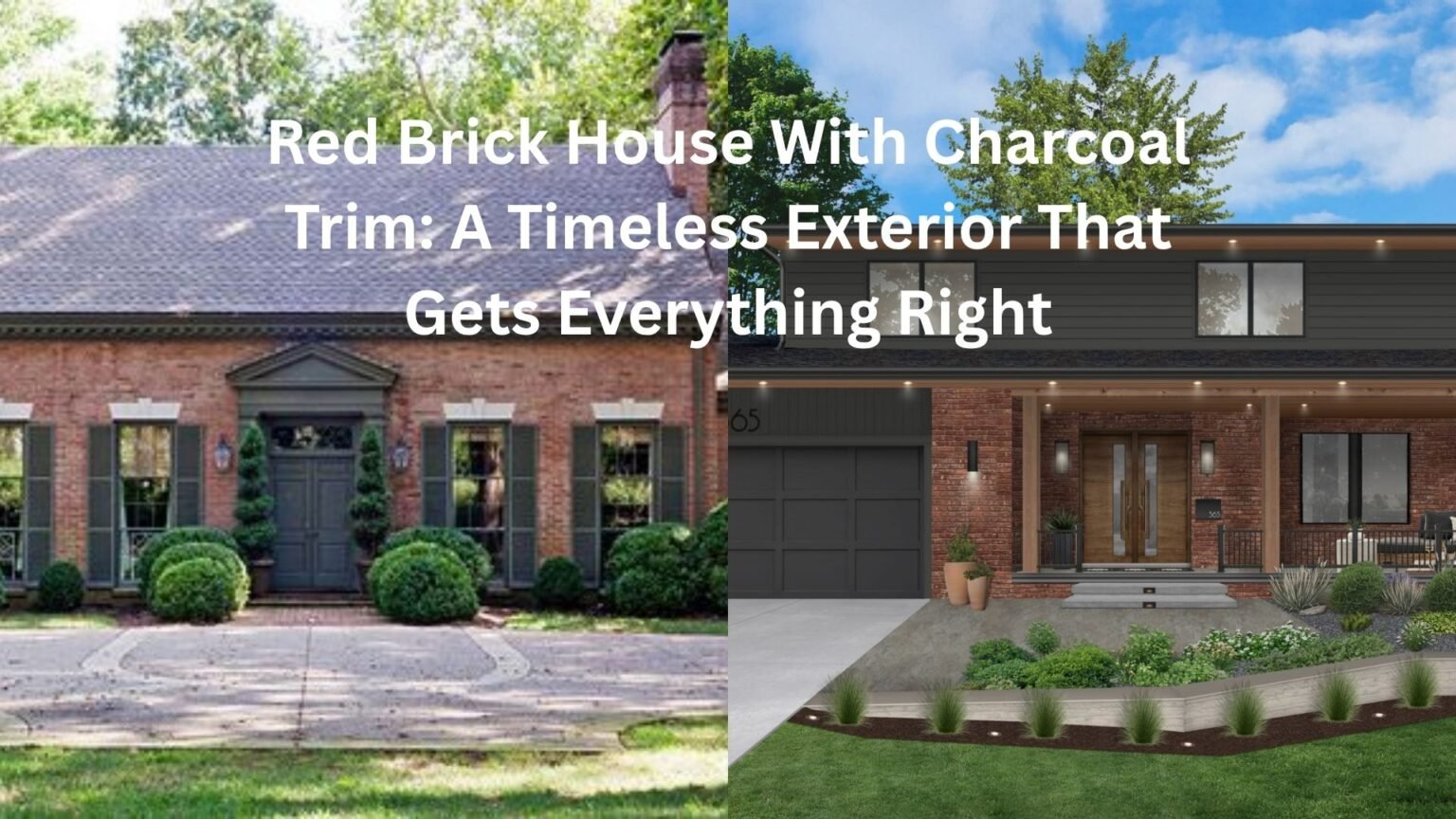
Some house color combinations come and go. Others seem to stick around no matter what design trends are doing.
A red brick house with charcoal trim falls firmly into the second category.
There’s something about the contrast that feels balanced. The warm texture of red brick brings character and history, while charcoal trim adds depth and a modern edge. Together, they create an exterior that looks polished without trying too hard.
You can drive through an older neighborhood filled with traditional homes or a newer development packed with custom builds, and this combination works in both settings. That’s rare.
What makes it even more appealing is that it doesn’t rely on flashy colors or trendy design tricks. Instead, it uses contrast, texture, and proportion to create visual interest.
For homeowners considering exterior updates, this pairing deserves a serious look.
Why Charcoal Trim Works So Well With Red Brick
Red brick naturally has a lot going on visually.
Even when the brick appears uniform from a distance, it’s usually made up of several shades of red, brown, orange, and sometimes even hints of purple. That variation creates richness, but it can also make color matching difficult.
White trim is often the default choice, and it certainly has its place. Yet charcoal brings out qualities in brick that white sometimes misses.
The darker trim grounds the exterior. Instead of creating a bright border around every window and roofline, charcoal frames architectural details in a subtler way. The eye notices the structure of the home rather than just the contrast.
Think about a classic red brick colonial home. Swap bright white shutters and trim for charcoal gray, and suddenly the house feels more sophisticated. The brick becomes the star while the trim quietly supports it.
That’s the sweet spot.
The Modern Yet Classic Appeal
One reason homeowners are drawn to charcoal trim is its ability to bridge traditional and modern styles.
Red brick has centuries of architectural history behind it. It’s familiar, dependable, and timeless.
Charcoal, on the other hand, feels contemporary. It reflects current design preferences without being overly trendy.
When these elements come together, the result feels updated without losing character.
Here’s a simple example.
Imagine two nearly identical brick homes on the same street. One has beige trim that blends into the background. The other has charcoal trim, black-framed windows, and a matching front door.
The second house instantly feels more current, even though the structure itself hasn’t changed.
That’s the power of thoughtful color contrast.
Choosing the Right Shade of Charcoal
Not all charcoal colors are created equal.
Some lean warm with brown undertones. Others carry cooler blue or slate influences. The best choice depends largely on the brick itself.
Warm red brick often pairs beautifully with charcoal colors that have subtle warmth. These shades feel cohesive rather than harsh.
If the brick contains cooler red or burgundy tones, a cooler charcoal can create a cleaner, more dramatic appearance.
Paint samples become essential here.
A color that looks perfect inside a paint store can appear completely different against brick under direct sunlight. Exterior lighting changes everything.
Many homeowners make the mistake of selecting trim paint from a tiny color chip. A larger sample painted directly onto trim boards usually provides a much better sense of the final result.
It’s worth the extra effort.
Windows Become a Bigger Feature
One of the unexpected benefits of charcoal trim is what it does for windows.
Dark trim naturally draws attention to window openings. Instead of blending into the wall, the windows become architectural features.
This effect is especially noticeable on homes with large front-facing windows.
The contrast creates visual depth and makes the exterior feel more intentional.
Black or charcoal window frames have become increasingly popular for the same reason. They create clean lines and add definition without overwhelming the design.
When paired with red brick, the effect feels balanced rather than stark.
The brick softens the darkness, while the trim sharpens the overall look.
Front Doors That Complement the Combination
A red brick house with charcoal trim opens the door to several attractive front door color choices.
Charcoal itself works beautifully if you prefer a cohesive appearance.
Black is another strong option. It creates a crisp, elegant look that feels timeless.
For homeowners who want a little personality, deep green can look fantastic against red brick and charcoal accents. Navy blue is another reliable choice.
Let’s be honest. Front doors don’t need to scream for attention to make an impact.
Sometimes a rich, dark color creates more curb appeal than a bright statement shade.
The surrounding brick already provides plenty of visual interest.
Roofing Matters More Than People Think
A common mistake happens when homeowners focus entirely on trim and forget about the roof.
The roof occupies a significant portion of the home’s exterior. Its color influences how every other element looks.
Fortunately, charcoal trim often works exceptionally well with dark gray roofing materials.
The colors connect naturally and help create a unified appearance.
If the roof already has charcoal, slate, or black tones, matching the trim can make the entire exterior feel more cohesive.
On the other hand, a roof with strong brown or tan tones may require more careful coordination.
Nothing has to match perfectly, but everything should feel like it belongs together.
Landscaping Plays a Supporting Role
Color combinations don’t exist in isolation.
Landscaping can dramatically affect how a red brick house with charcoal trim feels.
Greenery tends to look particularly vibrant against dark trim. Shrubs, ornamental grasses, and flowering plants stand out more clearly because the darker elements create visual contrast.
This is one reason many professionally designed homes use darker accents.
The landscape becomes part of the presentation.
Picture a red brick home with charcoal trim surrounded by neatly maintained hydrangeas, boxwoods, and seasonal flowers. The darker trim creates a backdrop that allows both the brick and the landscaping to shine.
The result feels layered and complete.
Maintenance and Long-Term Appearance
Practical considerations matter too.
One advantage of charcoal trim is that it often hides minor dirt and wear better than bright white trim.
White trim can show dust, mildew, and weather staining relatively quickly, especially in humid climates.
Charcoal tends to be more forgiving.
That doesn’t mean it’s maintenance-free. All painted surfaces eventually need cleaning and touch-ups.
However, homeowners often find darker trim easier to keep looking fresh between repainting cycles.
The brick itself also contributes to durability. Red brick remains one of the most resilient exterior materials available.
Together, brick and charcoal trim create an exterior that’s both attractive and relatively low maintenance.
That’s a combination many homeowners appreciate after a few years of ownership.
When This Color Combination Works Best
While it’s versatile, this look tends to shine on certain architectural styles.
Traditional colonials benefit from the added sophistication charcoal provides.
Craftsman homes gain extra definition around windows, eaves, and porch details.
Modern farmhouse designs often use charcoal accents to create a cleaner, more contemporary feel.
Even simple ranch homes can look dramatically updated with this approach.
The key isn’t the style itself.
It’s the presence of architectural details that charcoal trim can highlight.
Every window frame, roof edge, and decorative feature becomes a little more noticeable when outlined with a darker color.
Done well, the home appears more intentional and refined.
Small Exterior Updates That Make a Big Difference
For homeowners who aren’t ready for a complete exterior makeover, charcoal trim can still inspire smaller updates.
Changing exterior light fixtures to black or charcoal finishes often strengthens the overall look.
House numbers, mailbox finishes, railings, and porch hardware can follow the same color direction.
These details may seem minor individually.
Collectively, they create consistency.
A house rarely looks polished because of one dramatic feature. More often, it’s the accumulation of small, coordinated choices.
That’s especially true with exterior design.
The Lasting Appeal of Red Brick and Charcoal
Some exterior color combinations feel tied to a specific decade. Others manage to remain relevant year after year.
A red brick house with charcoal trim belongs in that second category.
The warmth of brick prevents the darker trim from feeling cold. The charcoal keeps the brick from looking dated. Together, they strike a balance that’s difficult to achieve with many other color pairings.
What makes this combination so appealing is its flexibility. It can lean traditional, modern, rustic, or refined depending on the home’s architecture and surrounding details.
Most importantly, it feels authentic.
Instead of chasing trends, it builds on materials and colors that have proven themselves over time. For homeowners looking to enhance curb appeal while maintaining long-term style, a red brick house with charcoal trim remains one of the smartest exterior choices available.